The Fossil Record Speaks for Itself!
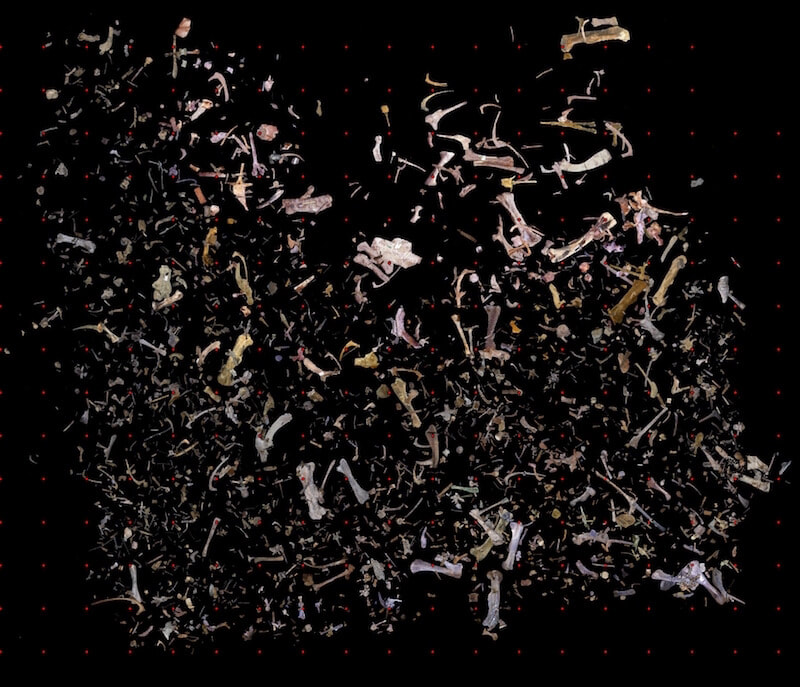
(Authors: Sean Michael Morris; Moses David, PhD in Chemical Engineering; Preethi Morris, PhD Researcher) The fossil record is the backbone of Darwinism and Macroevolution. This record has been radically misinterpreted by Atheists. A conflict of interest has confused the interpreters for centuries. Personal bias against God has brought to birth countless theories that are imposed upon the fossil record. Naturally, they are misreading the testimony of the rocks. Erroneous ages produced by radiometric dating aren't helping the situation. It is high time that believers take back the fossil record by providing a correct interpretation.

This article is not a science lesson. Firstly, we will explore what the Bible says about the flood and the fossil record. Secondarily, we will glean from science to better understand the superior wisdom of Holy Scripture. The Word of God will explicitly guide us into the science of the fossil record. Baptism is an appropriate description for the worldwide flood in the days of Noah. We learn this from the apostle Peter in 1 Peter 3:18-22. The word baptism in Greek literally means immersion. During the flood, “the old world” was fully immersed in water (2 Pet. 2:5). The water stood 26 feet above the tallest mountain on earth after 150 days of flooding (Gen. 7:20, 24). Then the water receded for a total of 165 days (Gen. 8:13). During the recession, a new world emerged out of the water. The differences between the old and new world were staggering to behold, but only those who lived in the old world could tell the difference. We are talking about men like Noah, Shem, and Japheth, seeing that Ham eventually became an apostate (Gen. 9:18-27). They told everyone else about what existed on the other side of the flood. Noah and Shem were especially faithful in making sure that all their disciples in the up-and-coming generations knew about the flood (Gen. 6:8-9, 9:26-27, 14:18). Noah lived 600 years before the flood and 350 years after the flood. Shem lived 98 years before the flood and 502 years after the flood. Their unique longevity of life allowed them to personally teach over 10 generations of disciples. Hence, Melchizedek acted as a Priest for Abraham in Genesis 14:17-24.

This brings us to the testimony of Job, Eliphaz, Bildad, Zophar, and Elihu. Their discourse in the Book of Job is filled with many weighty and complex doctrines. Their fluency in theology is unquestionable. How do you think these primitive believers learned all these things? Internal evidence in Scripture puts Job and his contemporaries in the 5th generation from Noah. Evidently, they were all personally discipled by Noah and Shem. However, they didn’t refer to Noah and Shem by name in the Book of Job. Job, Eliphaz, Bildad, Zophar, and Elihu called Noah and Shem ancients because of their great age (Job 12:12-13).
“With the ancient is wisdom; and in length of days understanding. With him is wisdom and strength, he hath counsel and understanding.” - Job 12:12-13
As ancients, Noah and Shem were much older than their fathers and grandfathers (Job 15:10). They were Patriarchs in the old world who survived the flood and lived to tell the story in the new world. Given their “length of days” it is easy to see how they acquired such wisdom, understanding, and counsel (Job 12:12-13). Noah and Shem were discipled in the old world by men who personally knew Adam for hundreds of years. Lamech, Noah’s father, personally knew Adam, Seth, and Enoch. Keep in mind that the Patriarchs were obligated to pass on the knowledge of God to the next generation. This obligation is reflected in the Law (Ps. 44:1, 71:18, 78:1-7, Joel 1:2-3; see Ex. 10:2, 13:8-9, 14, Deut. 4:9, 6:4-9, 20-25). Therefore, we can be sure that Job, Eliphaz, Bildad, Zophar, and Elihu became fluent in theology through the teaching of Noah and Shem, even as they repeatedly emphasized during their discourse (Job 5:1, 27, 6:10, 8:8-10, 12:12-13, 15:7-10, 17-19, 20:4).
Noah and Shem’s eyewitness testimonies about the flood were kept alive through their disciples. Now they serve as experts in this field. Just listen to them speak! Why is the discourse in the Book of Job filled with biblical geology? Because it is impossible to comprehend the flood without biblical geology.

Noah is the first person to tell us about “the fountains of the great deep” in the Bible (Gen. 7:11). Therefore, we can be sure that Noah told his disciples everything he knew by prophecy about these fountains and how they were employed by God to bring about the flood. Noah’s disciples called these fountains “the springs of the Sea” (Job 38:16). They knew of their existence and utility, and that they were located at the bottom of the Ocean (Job 38:8-11, 16). They even knew how these fountains related to the “decreed” boundaries of the Sea with respect to dry land (Job 26:10, 38:8-11). Evidently, Solomon the wise learned these details of biblical geology from them (Prov. 8:23-31).
More specifically, Noah’s disciples knew that dryland was originally built with a “breadth” and “foundations” that made it immovable and unsinkable (Job 38:1-7, 18; Ps. 104:5). However, when God repented and decided to flood the world (Gen. 6:6-7), it was then that all the fountains of the great deep were “broken up” (Gen. 7:11, Job 38:8-11), and consequentially “the deep” overflowed the foundations of the earth and stood above the highest mountains (Ps. 104:6).
Noah was both a Seer and an eyewitness of the flood. He couldn’t speak of these things without pathos and enthusiasm. Any type of personal relationship with him would have deeply impacted Job, Eliphaz, Bildad, Zophar, and Elihu. Oh, to see Noah tell the story! Only an eyewitness could have told them about the Continental Sprint that occurred in the breakup of Pangea. Famous geologists in modern times have explained how this breakup during the flood would have caused a mega-sequence of tsunamis that was big enough to wash over whole continents. Job and his companions provide some shocking details about this geological catastrophe.
Noah saw mighty mountains getting struck by tsunamis with such force that they were visibly falling, overturning, and disappearing during the flood. Meanwhile, the surrounding terrain of the world was repeatedly and violently in upheaval. Consequentially, the landscape and topography of the earth radically changed. Rivers disappeared, appeared, and changed places. Great canyons were formed during the recession. All this and more was described by Job and his companions.

Secular scientists promote the bogus theory of continental drift. Creation scientists promote the idea of a continental sprint. Both agree that the supercontinent, Pangea, was broken apart into seven continents.


Famous geologists have labored hard to give an explanation as to how this happened during the flood, and everyone agrees that their work is an indispensable contribution to this field. It is easy to imagine how the rapid formation of the Mid Ocean Ridge System would have brought about a mega-sequence of tsunamis worldwide. We are talking about 40,000 miles of underwater mountains going around the world! For instance, the Mid Atlantic Ridge is only a part of the Mid Ocean Ridge System, and everyone can clearly see how it was produced during the creation of the Atlantic Ocean when the West was separated from the East. However, now we need to harmonize this geological explanation with the ancient testimonies that are preserved in Holy Scripture.

Worldwide tsunamis on this scale created sedimentary upheaval in every wave of water. Each wave also swept away a mixture of marine and terrestrial animals (both dead and alive!) along with loads of organic material. Given the circumstances, as each tsunami passed by or expired, a thick cloud of sedimentary sludge quickly sank to the face of drowned continents with great force and buried all the animals and organic material in tens to hundreds of feet of mud, sand, rock, and volcanic ash. Now imagine this in a mega-sequence of tsunamis worldwide! Repeated tsunamis on a grand scale sent waves across whole continents in all directions with every earthquake that was being caused by the formation of the Mid Ocean Ridge System during the division of the continents. All this is to say nothing about the tsunamis that were being created by powerful injections of water coming from the breakup of all the fountains of the great deep (Gen. 7:11).
During the flood, each tsunami left in its wake a sedimentary layer that was tens to hundreds of feet thick. For some perspective, an earthquake in 2011 caused a 130-foot tsunami to strike Japan and it deposited up to two feet of sediment on land. The natural outcome of a mega-sequence of tsunamis, lasting ≈110 days, is the stacking of these sedimentary layers until they were thousands of feet thick. Trillions of dead things that were buried in the midst were then put into an environment that was perfect for fossilization.

The epic scenery of a scarred world helps us visualize the power of the flood. the Grand Canyon brings into view 15,000 feet of sedimentary layers, all of which were laid down and turned into rock during ≈110 days of flooding and ≈74 days of recession respectively. The canyon itself only exists due to the runoff waters of the flood. We are looking at 6,000 feet of water erosion that carved a massive chasm in pure rock 18 miles wide and 277 miles long, something that was easily done during the recession of ≈693 million trillion gallons of water for the latter part of ≈90 days.
Fossilization takes place when the remains of organisms are preserved in rock. This is not a normal occurrence in nature. Usually, when organisms die, they simply decompose and turn into dust. The skeletons of our modern graveyards aren’t turning into fossils! Nor is the roadkill of our highways. Why? Soil that is made up of mud, sand, or ash doesn’t normally encounter geological circumstances (water, pressure, & temperature) that would turn it into rock on a time scale where a dead organism would still be intact, which would then allow the dead thing to be preserved in rock. Understandably, if the soil doesn’t turn into rock, then the buried organisms will not be fossilized.
A correlation exists between the formation of sedimentary layers of rock and fossils. Deposited sediment turns into a sedimentary layer of rock under similar conditions as when dead organisms turn into fossils. Having a basic understanding of both will help us reckon with the unusual possibilities and abnormal probabilities in the environment provided by a worldwide flood of biblical proportions.
Fossilization is a process that requires a major flood of water which is carrying enough sediment in its current to rapidly and deeply bury organisms dead or alive. A minimum burial depth of 660 to 1,320 feet (0.125 to 0.25 miles) is required to begin this process of fossilization because it would provide a needed pressure of 2,000 to 5,000 psi and a temperature of 20 to 60 °C. Now that we have the data for a minimum burial depth, we need to determine how long it would take to complete the process of fossilization under these conditions.
Science proves that it would take a long time (years to centuries) to complete this process depending on the mineral saturation of the environment. However, higher temperatures / pressures will increase the rate of fossilization through accelerating the speed of mineralization. In laboratory conditions, fossilization was completed within several hours at a temperature of 100 °C (an increase of 40 °C) with a high supersaturation of minerals at a pH of 8 (Shukla and Sharma 2013). Evidently, even a small increase in temperature dramatically increased the rate of fossilization.
This will prove to be very important when it comes to the flood scenario because it provided an environment of extremely unusual and otherwise impossible pressures and temperatures. And with every increase in pressure and temperature, the faster and easier an organism would have become a fossil. Also, keep in mind that both pressure and temperature increase with the depth of burial. In other words, the deeper an organism is buried, the sooner it will become a fossil.
Deposited sediment turns into a sedimentary layer of rock in a process called lithification. This process requires a major flood of water that is carrying a similar amount of sediment that is needed for fossilization. The sediment, like fossils, needs to be buried for the transformation to occur. A minimum burial depth of 2,640 to 5,280 ft (0.5 to 1 mile) would apply a needed pressure of 2,000 to 5,000 psi and a temperature of 20 to 40 °C to turn a sedimentary layer of mud, sand, or ash into rock. Only a slight increase in depth is needed for lithification compared to the data for fossilization.
Now that we have the data for a minimum burial depth, we need to determine how long it would take to complete the process of lithification under these conditions. Science proves that it would take a long time (years to centuries) to complete this process depending on the temperature and pressure of the environment, but laboratory experiments that provide a relatively small increase in temperature or pressure are proven to create the same leap in the rate of lithification.
Conclusively, we can all agree that an organism’s fossilization, or a sediment’s lithification, depends upon floodwater, sediment, and burial providing specialized ingredients of time, pressure, and temperature. The data points of minimums for each are impressive. However, amazingly, this data doesn’t accurately represent the conditions of the flood in the days of Noah. Factoring in the biblical details of the flood will significantly change the data, and then we need to reevaluate.
Christians should be going to the Bible for data on the flood. The details of the flood (time, pressure, & temperature) will change the conversation about the fossil record. This data includes an approximate peak elevation of floodwater (providing extremely high pressures and temperatures) and a timeline of major events during the flood (providing sufficient time). Have you ever heard of a biblical timeline for the flood? Both dates and days are provided in the Bible.
|
Date #1: Gen. 7:11
Date #2: Gen. 8:4 Date #3: Gen. 8:5 Date #4: Gen. 8:13 Date #5: Gen. 8:14 |
40 Days: Gen. 7:4, 12, 17
150 Days: Gen. 7:24 |
There are four phases in total: two phases of flooding and two phases of recession. During the slow phase of the flood, it rained ≈11.7 inches per day for 40 Days, and we can assume that the fountains of the great deep played a supplemental role in this flooding period (Gen. 7:4, 12, 17). But the outcome of this flooding is relatively insignificant when it comes to fossilization and lithification.

The fast phase of the flood and the slow phase of the recession provided the needed pressures and temperatures for rapid fossilization and lithification. In summary, you could say, everything was buried in 110 Days, and everything was fossilized in 74 Days. Why? Let me explain. Although pressure and temperature have a synergistic relationship in the process of fossilization, we will discuss these two things independently for the sake of clarity.
During the fast phase of the flood, we can assume that erosion dramatically widened the already broken fountains of the great deep, and this caused the floodwater to rise ≈154 feet per day for 110 Days reaching a maximum elevation of ≈16,971 feet (Gen. 7:18-24).

The Ark was grounded on the mountain of Ararat on Day 150 of the flood, the same day that the floodwater reached its peak elevation – 26 feet (15 cubits) above the tallest mountain on earth (Gen. 7:20, 8:4). Apparently, Ararat was the tallest mountain on earth at the time, because the Ark was grounded on it while sitting in the water at a depth of ≈39 feet. Therefore, we can be sure that the flood reached an elevation of ≈16,971 feet, and this provided a hydrostatic pressure of ≈7,300 psi. Higher mountains, like Everest, didn’t exist at the time, and weren’t created until the recession period of the flood.

A hydrostatic pressure of ≈7,000 psi, even for a short amount of time, is revolutionary to the conversation about fossilization. However, we aren’t talking about a short amount of time. During the slow phase of the recession, the floodwater elevation only dropped ≈26 feet in 74 Days (Gen. 8:3, 5). That is ≈4 inches per day for ≈74 Days! Consequentially, the floodwater was providing a sustained hydrostatic pressure of ≈7,000 psi for over two months. Maybe the LORD purposefully making fossils? It wasn’t until the fast phase of the recession that the floodwater dropped ≈188 feet per day for 90 Days.
Naturally, during the slow phase of flooding (40 Days), the mouth of the broken-up fountains was relatively narrow. Supernaturally, God did this to set the stage for Messianic Typology (1 Pet. 3:18-22). Naturally, during the fast phase of flooding (110 Days), we can assume that erosion dramatically widened the already broken fountains, and this caused the outflow of water to increase. Supernaturally, this was done to create an unforgettable burial during the baptism.
When the slow phase transitioned into the fast phase of flooding, the rising floodwater accelerated from ≈11.7 inches daily to ≈154 feet daily, and after a total of 150 Days it reached a maximum elevation of ≈16,971 feet (Gen. 7:18-24). Reimagining this in terms of gallons, a worldwide flood at this elevation required ≈693 million trillion gallons of water to be added to the surface of the world. A staggering ≈6 million trillion gallons of superheated water was coming up through the fountains of the great deep daily for 110 Days! This was made possible through the presence of deep underground oceans that exceed the volume of our current oceans by a factor of three.

Keep in mind that there are ≈348 million trillion gallons of water in the Earth’s oceans today sitting at a average temperature of 3.5 °C. At the breaking open of the fountains of the great deep, superhot pressurized water came up from the depths of the earth! Superheated water is liquid water that has been heated to a temperature above its normal boiling point (100 °C or 212 °F at standard atmospheric pressure) without actually boiling.
A hydrostatic pressure of 7,000 psi was compressing the superheated water and preventing it from boiling. Therefore, it could have been surging out of the fountains of the deep at a temperature exceeding 400 °C. For some perspective, the highest recorded temperature of water at a hydrothermal vent is 464 °C. Naturally, during the flood, the temperatures of the floodwater coming from the fountains of the deep depended upon the depth of each fountain, as depicted in the table.

“At a depth of 10 miles (52,800 ft) below the Earth’s surface, the temperature is 432 °C, and thus the water released from this depth will be at this temperature. Water released from other depths are also depicted in the table, gradually increasing by about 42 °C for every 1 mile below the earth’s surface. At atmospheric pressure, the water is in a superheated state when it is released from depths greater than 2 miles (10,560 ft) below the earth’s surface.
High volumes of superheated water being released at high pressures from great depths all around the world would have caused massive tsunamis. As the superheated water interacted with the cold surface water, massive amount of turbulence was created which in turn produced tsunami waves of superheated water and superheated steam depending on the location of the fountain.” – Moses David, PhD in Chemical Engineering
Volcanic activity worldwide, submarine lava spills during the formation of the Mid Ocean Ridge System, and superheated water from the fountains of the great deep all contributed to the creation of superheated tsunami waves. Also, superheated hydrothermal currents have the tendency to be supersaturated with minerals. Therefore, realistically, these were superheated and supersaturated tsunami waves crashing upon freshly laid sedimentary layers, thus creating a perfect environment for widespread fossilization.
The upper sedimentary layers were not exempt from fossilization in this case. Immense pressures and superhot temperatures (in the presence of supersaturated water) were being applied to all the sedimentary layers created during the first ≈110 Days of flooding, even the upper layers of sediment, because at least ≈16,000 feet of water covered the earth for well over ≈74 Days. Consequentially, the conditions were present to lithify the top layers of sediment as the organic material within was fossilized. The data provided makes sense of all four types of fossilization: Permineralization, Mold & Cast, Compression, and Carbonization.
Partially decomposed dead things experience Permineralization Fossilization. Soft tissue such as organs, fat, connective tissue, and skin is decomposed leaving behind the hard parts such as bones, shells, and teeth. The remaining organic material is then transformed into stone through a process called permineralization or petrification. Mineral rich water from the surrounding area permeates the remains of the organism while depositing minerals like silica, calcite, and iron. The minerals precipitate out and solidify within it effectively replacing the original material.
Any improbabilities of fossilization are radically minimized if not totally removed when it comes to the flood in the days of Noah. Permineralization Fossilization occurs under moderate pressure and temperature conditions characteristic of a shallow burial in a short amount of time. It is commonly reported that Permineralization Fossilization takes thousands to millions of years to occur, but it has been accomplished in laboratory conditions in 1 to 3 days at a pressure of 825-1350 psi and a temperature of 30-90 °C with calcium carbonate (Montes-Hernandez et al), in 2 to 8 weeks at a pressure of 180 psi and a temperature of up to 180 °C with silica (Goetze et al), and in 1 to 16 weeks at a pressure of 15 psi and a temperature of 250 °C with iron under oxidizing conditions (Picard et al). These pressures and temperatures were easily achieved in the real world during the flood as the bodies of organisms were being rapidly buried at depths of 660 to 1320 feet (0.125 to 0.25 miles).
However, even the upper levels of sediment, ranging from 1 to 660 feet, cannot be excluded from permineralization fossilization during the flood in the days of Noah. The needed time, pressure, and temperature were all still present. Volcanic activity worldwide, submarine lava spills during the formation of the Mid Ocean Ridge System, and superheated water from the fountains of the great deep all contributed to the creation of superheated tsunami waves, thus providing extremely hot temperatures for rapid fossilization. A pressure of ≈7,000 psi being applied by ≈16,000 feet of floodwater for at least 74 Days provided the time and extreme pressures necessary for rapid fossilization.
Totally decomposed dead things experience Casting & Molding Fossilization. The organism completely dissolves leaving behind a hollow space or impression in the sediment called a mold. If the mold is eventually filled with minerals, it then forms a three-dimensional replica of rock called a cast. This process allows for the fossilization of soft-bodied organisms as long as they are rapidly buried before decomposition.
Any improbabilities of fossilization are radically minimized if not totally removed when it comes to the flood in the days of Noah. Casting & Molding Fossilization occurs under moderate pressure and temperature conditions characteristic of a shallow burial in a short amount of time. It is commonly reported that Casting & Molding takes thousands to millions of years to occur, but it has been accomplished in laboratory conditions in 24 hours at a pressure of 3,750 psi with a temperature of 190 °C (Arindam Roy, et al). These pressures and temperatures were easily achieved in the real world during the flood as the bodies of organisms were being rapidly buried at depths of 660 to 1,320 feet (0.125 to 0.25 miles).
However, even the upper levels of sediment, ranging from 1 to 660 feet, cannot be excluded from casting & molding fossilization during the flood in the days of Noah. The needed time, pressure, and temperature were all still present. Volcanic activity worldwide, submarine lava spills during the formation of the Mid Ocean Ridge System, and superheated water from the fountains of the great deep all contributed to the creation of superheated tsunami waves, thus providing extremely hot temperatures for rapid fossilization. A pressure of ≈7,000 psi being applied by ≈16,000 feet of floodwater for at least 74 Days provided the time and extreme pressures necessary for rapid fossilization.
It is common to find plants preserved through Compression Fossilization. The organic material of such organisms is flattened by the weight of overlying sediment resulting in compression fossils, which retain small amounts of organic material, which often forms a thin carbon-rich film.
Compression Fossilization occurs under moderate pressure and temperature conditions characteristic of a relatively shallow burial at a pressure of 150 to 7,500 psi (0.1 to 1 mile) with a temperature between 50 to 200°C (1 to 3 miles). It is commonly reported that Compression Fossilization takes thousands to millions of years to occur, but it has been accomplished in laboratory conditions within 1 to 2 days at 130 to 250 °C and 2,400 to 4,500 psi (Roy et al, Saitta et al). These pressures and temperatures were easily achieved in the real world during the flood as the bodies of organisms were being rapidly buried at depths of 5,280 to 15,840 feet (1 to 3 miles).
However, even the upper levels of sediment, ranging from 1 to 5,280 feet, cannot be excluded from compression fossilization during the flood in the days of Noah. The needed time, pressure, and temperature were all still present. Volcanic activity worldwide, submarine lava spills during the formation of the Mid Ocean Ridge System, and superheated water from the fountains of the great deep all contributed to the creation of superheated tsunami waves, thus providing extremely hot temperatures for rapid fossilization. A pressure of ≈7,000 psi being applied by ≈16,000 feet of floodwater for at least 74 Days provided the time and extreme pressures necessary for rapid fossilization. Decomposing dead things release gases and fluids enabling Carbonization Fossilization. Consequentially, a carbon residue, or film, is left behind resulting in a two-dimensional imprint of the organism. The carbon compound gives the film a dark blackened appearance.
Carbonization Fossilization occurs under moderate pressure and temperature conditions characteristic of a shallow burial at pressures of 1,500 to 15,000 psi with temperatures of 80 to 250 °C. It is commonly reported that Carbonization Fossilization takes thousands to millions of years to occur, but it has been accomplished in laboratory conditions in a timeframe of hours to weeks at a pressure of 150 to 3600 psi and a temperature of 180 to 280 °C (Gulec et al, Libra et al, Saba et al, Titiric et al and Flori, et al). These pressures and temperatures were easily achieved in the real world during the flood as the bodies of organisms were being rapidly buried at depths of 1,056 to 10,560 feet (0.2 to 2 miles).
However, even the upper levels of sediment, ranging from 1 to 1,056 feet, cannot be excluded from carbonization fossilization during the flood in the days of Noah. The needed time, pressure, and temperature were all still present. Volcanic activity worldwide, submarine lava spills during the formation of the Mid Ocean Ridge System, and superheated water from the fountains of the great deep all contributed to the creation of superheated tsunami waves, thus providing extremely hot temperatures for rapid fossilization. A pressure of ≈7,000 psi being applied by ≈16,000 feet of floodwater for at least 74 Days provided the time and extreme pressures necessary for rapid fossilization.
The flood in the days of Noah made the foundation rock of the new world a graveyard of death that is forever etched in stone. Science proves that fossilization is no longer a mere possibility during the flood; that possibility has now become extremely probable; and that probability is a certainty as it aligns with the testimony of Holy Scripture.
Evolutionists of the scientific community have been very much preoccupied with the fossil record for all the wrong reasons. They have attempted in vain to control the story that is being told by the fossil record. The original story of the fossil record can be found in the Bible. Job was speaking about fossils under inspiration in Job 26:5-6.

The rocks have a story to tell if you know how to read it. Unbelievers read the rocks and call the fossil record a story of evolution, even though the missing links have never been found. New species are called miracles of evolution. Sinners blasphemously pay respect to Mother Nature. Meanwhile, believers say that the fossil record is telling a story about the flood. He that hath an ear, let him hear.

Our inquiry will begin by asking questions about the fish. Job said to “speak to” or “ask” the “fishes”, indicating that he was talking about more than one species of fish (Job 12:7, 8). In other words, Job was referring to the fossil record of marine animals. “The Fish of the Sea” is a generic term used in Genesis 1:26 to refer to all marine animals (Gen. 1:26).

|

|

A story is being told in the rocks! “Ask” these fish and they will “declare” to you how they were rapidly buried alive in the sediment of a flood, and it all happened so fast that these marine animals didn’t have time to finish eating their lunch. They were frozen in position and fossilized, indicating that they were struck by the sediment of a fast-moving tsunami travelling extremely fast! Deep ocean tsunamis in modern times, which are small in comparison, have been recorded traveling up to 500 mph.

How can jellyfish be fossilized? Jellyfish are extremely delicate creatures whose bodies are soft and made up of 95% water. They are extremely vulnerable to decomposition! Nevertheless, hundreds of fossilized jellyfish have been found in sandstone with the imprint of their entire bodies intact. This indicates that the jellyfish were suddenly and deeply buried in sand, and the sand then quickly turned into sandstone, thus preventing the presence of oxygen from promoting the decay of the jellyfish.

|

|
Birds, insects, and plants are particularly difficult to fossilize because of their weakness, vulnerability, and delicacy. Nevertheless, they are found abundantly everywhere in the fossil record. Even the most fragile features of this fossilized bird are marvelously preserved! Impressions of the feathers and even some organs are visible even to untrained eyes. “Ask” the “Fowls” and they will “tell” you that they were rapidly buried by the flood to enable such exquisite preservation.

“Ask” the “beasts” and they will “teach” you how they were rapidly buried the sediment of a flood, and it all happened so fast that some terrestrial animals were buried alive and didn’t have enough time to finish giving birth. This beast, the ichthyosaur dinosaur, was frozen in position while giving birth, exactly like the fish were frozen in position while eating another fish. Literally, the infant of the beast was still making its way through the birth canal when a tsunami struck and suddenly buried them in hundreds of feet of sediment. Tsunamis travelling hundreds of miles per hour crossed oceans and continents with ease.

|

|
A mixture of terrestrial and marine fossils have been found on dry land all over the world, even in the sedimentary layers of the highest mountains in the world, like the Himalayan Mountains. The presence of closed clam fossils are extremely remarkable! This indicates that the clams were buried and frozen alive in sediment. Fossilized marine animals have even been found on the summit of Mount Everest! Fossilized trilobites, brachiopods, ostracods, and crinoids were found at the summit of the highest mountain in the world.

Massive graveyards of fossils have been uncovered all over the world. Among the many terrestrial animals, like dinosaurs, you can see marine animals like crocodilians, turtles, and clams in the same sedimentary layer of rock. They all died together! The fossils are telling a story of worldwide destruction and death, as is vividly displayed at the Dinosaur National Monument of Utah.

|

|
Ask the “Earth” and it will “teach” you about how petrified trees were rapidly buried vertically in multiple layers of sedimentary rock, which is impossible if each of these sedimentary layers were created over the space of thousands to millions of years. These trees, commonly called polystrate fossils, prove that these sedimentary layers were laid down and turned into rock during one flood event rather than innumerable ones spanning millions of years.

Granted, sometimes we need the help of a Geologist to correctly read the rocks. Listen to Andrew Snelling give his own expert analysis of the rocks at the Grand Canyon: “At the boundaries between some sedimentary layers we find evidence of only rapid erosion. In most other cases, the boundaries are flat, featureless, and knife-edge, with absolutely no evidence of any erosion, which is consistent with no long periods of elapsed time, as would be expected during the global, cataclysmic Genesis Flood.” (Andrew Snelling).

|

|
Noticeable warping, bending, and folding can be seen in the sedimentary layers of rock at the Grand Canyon. Amazingly, this bending took place without the rocks breaking! This begs the question: “How could a series of sedimentary layers fold without fracturing? The only way is for all the sedimentary layers to be laid down in rapid succession and then be folded while still soft and pliable.” (Andrew Snelling).


|

|
At the bottom of the Grand Canyon, the rock of the preflood world is exposed. Geologists call this site the Great Unconformity. You can see where the sedimentary layers of rock from the flood were laid down upon the granite bedrock of the continents. The same kind of bedrock, an igneous rock, serves as a 20-mile-deep foundation to the continents. Standing there among the towering columns of sedimentary rock gives people some perspective! Divine providence made it possible for visitors to go there and stand with their own two feet upon the same rock that was created on Day #3 of creation week. Tourists are then forced to reckon with mountains of evidence that is standing before them. However, sadly, not everyone is learning the hard lessons of history.
“Knowing this first, that there shall come in the last days scoffers, walking after their own lusts, And saying, Where is the promise of his coming? for since the fathers fell asleep, all things continue as they were from the beginning of the creation. For this they willingly are ignorant of, that by the word of God the heavens were of old, and the earth standing out of the water and in the water: Whereby the world that then was, being overflowed with water, perished: But the heavens and the earth, which are now, by the same word are kept in store, reserved unto fire against the day of judgment and perdition of ungodly men.” – 2 Pet. 3:3-7
Truly, the fossil record speaks for itself! But not everyone is hearing it. Prophecy is being fulfilled as dishonest sinners continue to scoff at the evidence of the flood. The fish, beasts, birds, and rocks of the Earth cannot be silenced! We only need to be honest with the evidence that is all around us. Intellectuals and professionals will continue in a position of convenience to escape the derision of scoffers, but they do this at their own peril. Popularity in a world of sinners comes with a price (Luke 6:26, 1 Cor. 1:26). Not many wise and noble are called (1 Cor. 1:26). The apostle Peter says that they are “willingly ignorant” of these indisputable facts. The day of judgment shall declare it.
Shukla, A., & Sharma, T. (2013) Precipitation kinetics of calcium carbonate in simulated geothermal conditions. Journal of Crystal Growth, 362, 207-212
Roy, A., Pittman, M., Kaye, T.G., & Saitta, E.T. (2023) Sediment encased pressure-temperature maturation experiments elucidate the impact of diagenesis on melanin-based fossil color and its paleobiological implications. Paleobiology, 2023, 1-21
Picard, A., Kappler, A., Schmid, G., Quaroni, L., & Obst, M. (2015). Experimental diagenesis of organo‑mineral structures formed by microaerophilic Fe(II)‑oxidizing bacteria. Nature Communications, 6, Article 6277. https://doi.org/10.1038/ncomms7277
Oehler, J. H., & Schopf, J. W. (1971). Artificial microfossils: Experimental studies of permineralization of blue‑green algae in silica. Science, 174(4011), 1229–1231.
Mani, K. (1996). Permineralization. In Fossils: A window to the past. Retrieved from UCMP website. https://en.wikipedia.org/wiki/Permineralization
Götz, A. E., Montenari, M., & Costin, G. (2017). Silicification and organic matter preservation in the Anisian Muschelkalk: Implications for the basin dynamics of the central European Muschelkalk Sea. Central European Geology, 60, 1–23.
Güleç, F., Acar, C., & Yildiz, G. (2021). Influence of Pressure on the Hydrothermal Carbonization of Biomass. *Biomass Conversion and Biorefinery*, 11(3), 1023–1032. https://doi.org/10.1007/s13399-020-00785-w
Libra, J. A., Ro, K. S., Kammann, C., Funke, A., Berge, N. D., Neubauer, Y., ... & Emmerich, K. H. (2011). Hydrothermal carbonization of biomass residuals: a comparative review of the chemistry, processes and applications of wet and dry pyrolysis. *Biofuels*, 2(1), 71–106. https://doi.org/10.4155/bfs.10.81
Saba, A., El-Naas, M. H., & Ahsan, M. (2018). A review on biomass hydrothermal carbonization: Process parameters, characterization, and applications. *Renewable and Sustainable Energy Reviews*, 90, 936–956. https://doi.org/10.1016/j.rser.2018.03.138
Titirici, M. M., Thomas, A., Yu, S. H., Müller, J. O., & Antonietti, M. (2007). A direct synthesis of mesoporous carbons with bicontinuous pore morphology from crude plant material by hydrothermal carbonization. *Chemistry of Materials*, 19(17), 4205–4212. https://doi.org/10.1021/cm0707408
Fiori, L., Basso, D., Castello, D., & Baratieri, M. (2014). Hydrothermal carbonization of biomass: Design of a batch reactor and preliminary experimental results. *Chemical Engineering Transactions*, 37, 55–60. https://doi.org/10.3303/CET14370010



